Society needs to return to a state where debate is encouraged
Bill Leak has done us a great service in presenting his cartoon depicting an Aboriginal policeman interacting with an irresponsible father over the neglect of his son.
On at least three fronts we need to sober up and have a long hard look at ourselves. Father hunger is real, and poor or even non-existent fathering is causing immense damage across too much of our society.
Secondly, when we disempower people in the name of political correctness by silencing their strongly held views because they don’t suit us, we endanger political and social cohesion. Furthermore, we need a serious, full-blooded debate in this country about the way in which we debate.
Like Leak, I sat in classes with Aboriginal children in bush primary schools. Ever since, we have both known how deep and real father hunger is for too many Aboriginal kids. In my two decades as a federal member for a seat with one of the highest proportions of Aborigines in the country, I consistently found the plight of many indigenous children deeply troubling.
Aboriginal elders, men and women, would sometimes literally weep at the loss of their young men to booze and the resulting impact on their children and communities. One man I particularly respected from out Walgett way told me that young Aboriginal men were being socialised by the “trash end” of white culture while white elites refused to acknowledge the problem in the name of protecting civil liberties.
Aboriginal women I’ve spoken with share a disdain for the undercurrent being pushed: that quality fathering doesn’t matter. It plainly isn’t true, whether you’re talking about indigenous communities or Australia at large.
The extensive research undertaken and collated by the University of Western Australia’s Fathering Project has proved the profound societal importance of good fathering beyond any doubt.
These Aboriginal women have been telling me for years how deeply they often fear for their children’s safety because of alcoholism among the young men in their communities. They agonise about it, wanting governments to listen long enough to really understand the problems so that they can be jointly tackled, not just papered over with some new government program in response to the latest crisis drawing unwelcome media attention.
We need to understand how disempowering it is for these women, and indeed elders, who are begging for help in addressing substance abuse and irresponsibility when no one wants to talk honestly. How insulting to them to be told that rather than the interests of their children, what is deemed to take a higher priority is that others (even perpetrators) should not be offended. It is almost as though not offending the sensibilities of today’s irresponsible adults is more important than securing a good society for our children tomorrow.
And how frustrating for those women and elders when someone finally finds a way to force this vitally important subject into the national discussion only to find a barrage of demands that it be withdrawn. It is amazing to me that there is not a greater cognisance among the intelligentsia who seem so effective in controlling our national dialogue that you can only maintain political correctness for so long before dams start bursting. Witness the US presidential race, revealing as it does the evident frustration of many Americans who feel they are not being heard.
Alternatively, ask any decent middle Australian who surprised themselves by voting for One Nation whether they feel their world view is respected and taken into account by today’s decision-makers. Ask them whether they feel they will be denigrated and shut down if they put their views forward. Surely we can all see the dangers of limiting free expression.
Frankly, this episode crystallises for me the growing belief that in fact the West’s greatest challenge is to learn again to talk to one another and listen to one another with civility.
Bernard Lewis, 100 years old, of Princeton University in the US, has tellingly noted that the degree of thought control and of limitations on freedoms of expression is without parallel in the Western world since the 18th century, and in some cases longer than that.
This is chilling. Our most basic right in democratic Australia is that each of us has the standing to put our position on the table and to expect that our ideas will be the issue rather than the person who put them there. Only by properly considering all perspectives can we hope to find the optimal way through the truly confronting array of cultural, economic and strategic challenges confronting us as a nation. Only when everyone has had their say will we have widespread acceptance of the legitimacy of policy outcomes.
You can’t get good public policy from a bad or silenced debate. It doesn’t happen, as the evidence all around us in contemporary Australia screams. Australians from many different political persuasions are starting to realise this. Thank you, Bill Leak, for courageously sparking this fire. It is critical we now drop our differences and confront the common enemy of political correctness in the same way volunteers unite to fight a bushfire.
People have taken to the streets on issues of less importance than this; here is a chance to strike a real blow for our children’s freedoms in a healthy society by insisting on a return to sanity in our national conversations.
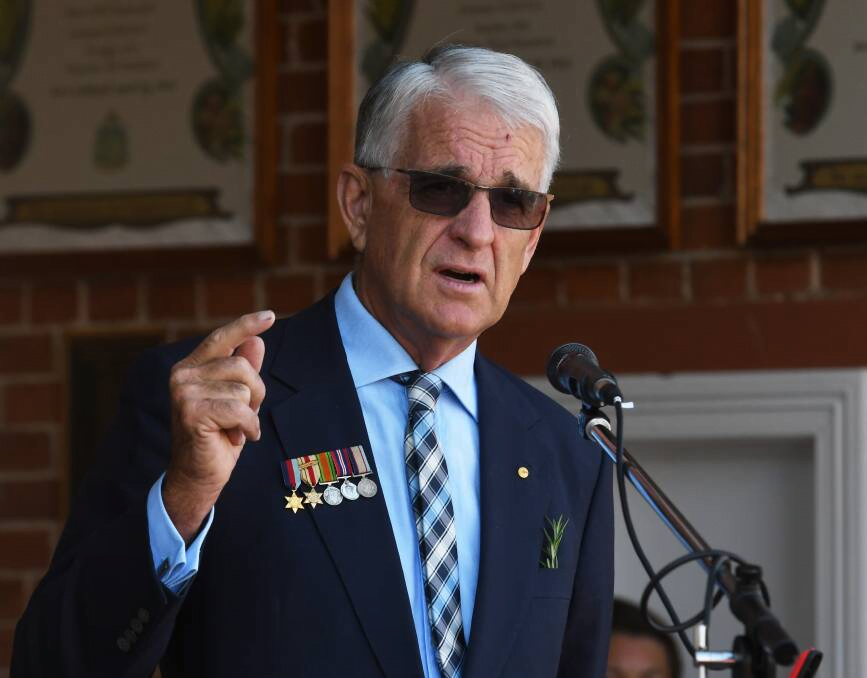
Former deputy prime minister John Anderson was chairman of the review panel into indigenous constitutional recognition
Originally published in The Australian
Original Article
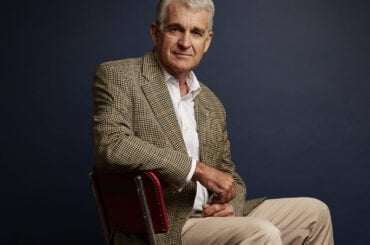
John Anderson
When I stepped down from public leadership in 2005 I did so with a clear and optimistic vision of where this country was headed.
By and large, politicians then were men and women of character and principle. READ MORE ABOUT JOHN